




Building a digital product no longer always requires months of traditional software development. No-code platforms allow businesses to create applications using visual interfaces, reusable components, workflow builders, and prebuilt integrations instead of writing large amounts of code from scratch.
For startups, enterprises, and non-technical founders, this can significantly shorten the path from an idea to a usable product. However, no-code does not mean that every application can be built simply by dragging and dropping components. Architecture, integrations, security, scalability, and user experience still require careful planning.
That is why businesses increasingly work with specialized development partners. Companies offering No-Code app development services USA can help organizations determine whether no-code is appropriate, select the right platform, and build applications that can support real business requirements.
What Is No-Code App Development?
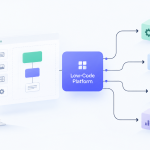
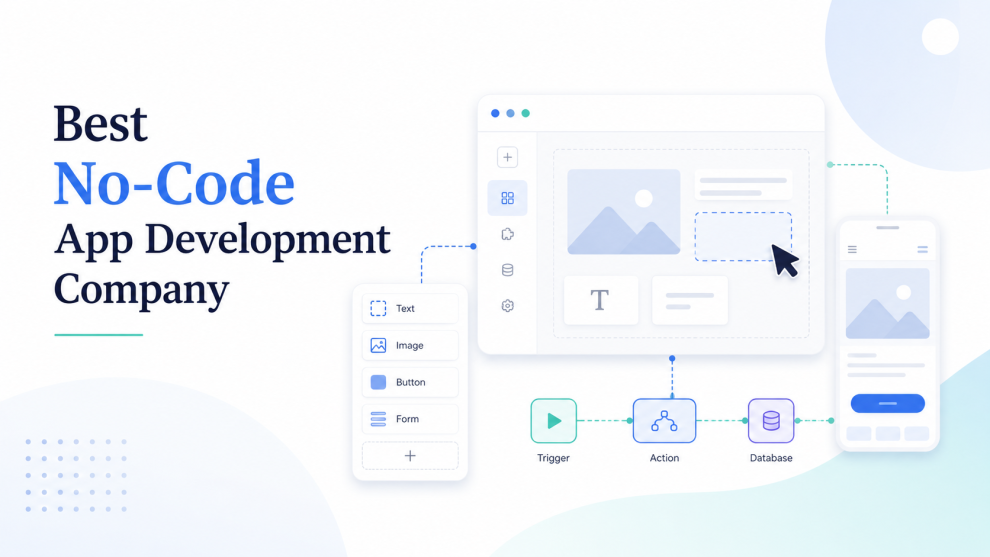
No-code app development is an approach that allows teams to build applications through visual development environments rather than traditional programming.
Platforms such as Bubble, Webflow, Glide, Airtable, FlutterFlow, and similar tools provide prebuilt components for interfaces, databases, workflows, authentication, and integrations.
Businesses commonly use no-code development for:
- MVPs and proof-of-concept applications
- Customer and employee portals
- Workflow automation tools
- Internal business applications
- Marketplace platforms
- Dashboard and reporting systems
- Simple SaaS products
The biggest advantage is development speed. Teams can test an idea, collect feedback, and make changes without investing heavily in traditional engineering from day one.
Why Is No-Code Development a Good Business Opportunity?
Digital transformation continues to create demand for new applications, but experienced software engineers remain expensive and difficult to hire. No-code gives businesses another way to close that gap.
A company might need an internal approval application, for example, but building the system traditionally could take several months. A no-code team could potentially deliver an initial version much faster by combining visual development with existing APIs and cloud services.
No-code is particularly attractive when businesses need to validate ideas quickly. Instead of spending a large development budget before understanding customer demand, companies can launch an MVP and use real-world feedback to guide future investment.
The opportunity is therefore less about eliminating developers and more about using engineering resources more efficiently.
How Should You Choose the Best No-Code App Development Company?
Choosing a development partner should involve more than checking whether the company works with popular no-code tools.
The best No-Code app development agencies should understand product strategy, UI/UX, integrations, APIs, databases, cloud infrastructure, and traditional software engineering.
Companies should also ask whether a partner can support hybrid development. Some products begin with no-code but eventually require custom backend services, advanced integrations, or native functionality.
A good development company should be able to explain where no-code works well and where custom development would be the better choice.
Which Are the Best No-Code App Development Companies?
1. Why Is GeekyAnts a Strong Choice for No-Code App Development?
GeekyAnts is a digital product engineering company with experience across web, mobile, AI, UX, and enterprise application development.
Its broader engineering capabilities can be useful for companies considering no-code because applications frequently require more than the visual development platform itself. API development, custom integrations, cloud infrastructure, authentication systems, and product design may all become part of the project.
GeekyAnts can therefore be particularly relevant for businesses looking for a partner that can combine rapid development approaches with conventional software engineering when necessary.
2. What Makes Diffco a Good No-Code Development Partner?
Diffco works across software product development, mobile applications, web platforms, and startup-focused technology projects.
Its product development background makes it worth considering for companies that want to move quickly from concept to MVP while maintaining a broader technology roadmap.
Businesses evaluating Diffco should discuss which no-code or low-code platforms best fit their application and how the architecture could evolve if usage increases.
3. When Should Businesses Consider OutX AI?
OutX AI is another option for companies exploring modern application development approaches, particularly when automation or AI functionality forms part of the product.
For businesses creating AI-enabled workflows, internal applications, or early-stage digital products, combining no-code interfaces with APIs and AI services can considerably accelerate experimentation.
The important consideration is whether the application will remain relatively lightweight or eventually require a more customized technology stack.
4. Why Could Tateeda Be Suitable for Complex Projects?
Tateeda provides custom software development services and works on applications that can involve more complex business requirements.
That broader engineering background can be valuable when a no-code product needs integrations with existing systems or when certain functionality requires custom development.
Companies considering Tateeda should evaluate the balance between no-code development and traditional engineering based on their long-term product requirements.
5. What Does WebShark Web Services Offer for No-Code Projects?
WebShark Web Services can be considered by businesses looking for web-focused digital development capabilities.
For relatively straightforward websites, business applications, portals, or workflow systems, no-code development can reduce both development effort and time to market.
As with any provider, businesses should examine previous projects, development processes, post-launch support, and experience with the specific platform they intend to use.
Is No-Code Development Suitable for Every Application?
No. That is one of the most important things businesses should understand.
No-code works particularly well when speed, experimentation, and workflow automation matter more than highly specialized technical functionality.
Applications involving extremely high transaction volumes, complex real-time processing, unusual security requirements, or deeply customized functionality may require traditional engineering.
In many cases, the best solution is hybrid. Businesses can use no-code for interfaces and workflows while relying on custom APIs or backend systems for complex functionality.
Working with experienced providers of No-Code app development services USA can help businesses make that decision before development begins.
What Should Businesses Ask Before Hiring a No-Code Development Agency?
Before signing a contract, companies should ask about platform expertise, ownership of the application, integration capabilities, scalability, security, maintenance, and migration options.
They should also understand what happens if the application outgrows the original platform.
The best No-Code app development agencies should not simply recommend no-code for every project. They should be willing to recommend custom development when the business requirements justify it.
Frequently Asked Questions About No-Code App Development
How much does it cost to build a no-code app?
Costs vary significantly depending on application complexity, integrations, design requirements, automation workflows, and the platform being used. Simple prototypes generally cost considerably less than complex business applications.
How long does no-code app development take?
Basic applications can sometimes be developed within weeks. More sophisticated products involving integrations, custom workflows, testing, and user experience design may require several months.
Can no-code apps scale?
Yes, some no-code platforms can support significant usage. However, scalability depends on platform architecture, database design, workflows, integrations, and application complexity.
Can a no-code app become a full software product?
Yes. Many companies use no-code to launch MVPs and even production applications. As the product becomes more complex, businesses may introduce custom code or migrate certain components to conventional infrastructure.
Which company is best for no-code app development?
The right company depends on the project’s complexity and long-term roadmap. GeekyAnts, Diffco, OutX AI, Tateeda, and WebShark Web Services are five companies businesses can evaluate when looking for a no-code development partner.




Add Comment