




Database migration often looks simple from the outside. Move the data, update the connection, test the application, and ship. Engineering teams know the reality is different.
The real work sits inside scattered queries, backend-specific logic, authentication assumptions, schema dependencies, and edge cases hidden across the application. By the time a product needs to move from a prototype database to a production-ready backend, migration becomes a product risk instead of an infrastructure task.
This is why database migration modernization should start with architecture. Teams need a system where the application can evolve without being locked to one storage decision forever.
Why Database Decisions Become Expensive Later
Early-stage product teams usually choose speed. They use SQLite for local-first builds, Firebase for fast iteration, Supabase for managed PostgreSQL, or another backend that helps them reach launch quickly. That choice is not wrong. In most cases, it is practical.
The problem begins when the database becomes deeply tied to product behavior. Query patterns start shaping features. Authentication rules depend on the backend. Schema design reflects short-term delivery pressure. Frontend and backend logic begin to assume one database will always remain in place.
When the product grows, the same decisions that helped the team move fast can slow down the next stage. A team may need stronger analytics, better compliance controls, lower costs, multi-region support, or a relational model. At that point, migration becomes harder because the application was never designed for change.
A Better Pattern: Separate Product Logic From Storage Logic
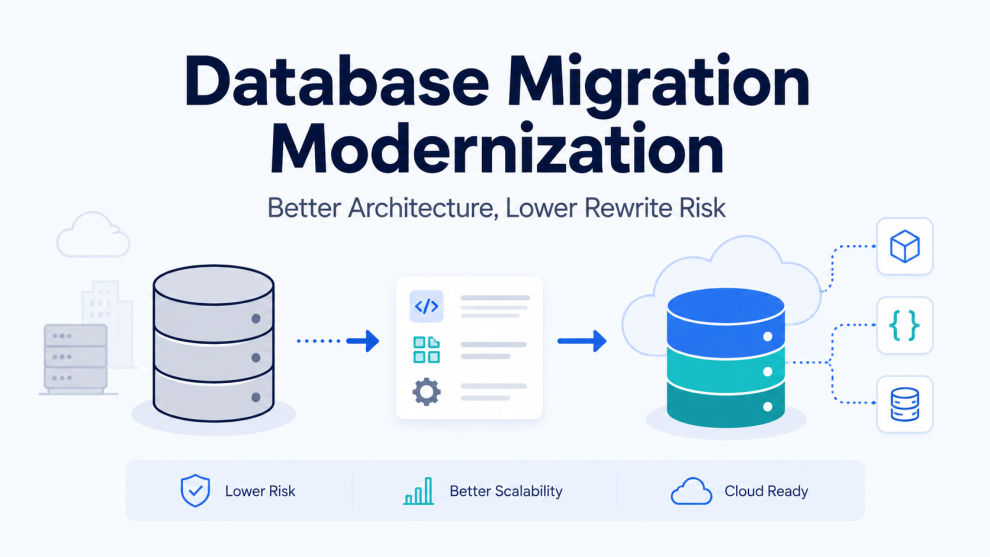
A cleaner architecture uses a database abstraction layer between the application and the backend. The goal is not to hide every database detail. That would create a weak and unrealistic abstraction. The goal is to give the product a stable way to communicate with storage while keeping backend-specific implementation inside adapters.
This pattern allows teams to write application logic once and connect it to different database engines through defined interfaces. For example, a product may start with SQLite during prototyping and later move to Supabase, Firebase, or another backend without rewriting large sections of application code.
The practical benefit is simple. Engineers spend less time hunting database-specific logic across the codebase and more time improving the actual product. Migration becomes a controlled engineering task instead of a scattered rewrite.
Where This Architecture Works Best
A database abstraction layer works especially well when the product roadmap is still evolving. MVPs, internal tools, SaaS platforms, AI workflow products, marketplaces, and mobile apps often change their backend requirements as usage grows.
A founder may not know the final database choice on day one. A VP of Engineering may need to support multiple product teams that choose different backends. A platform team may want a common interface that reduces duplication across apps.
In these cases, abstraction creates flexibility. It also gives teams a cleaner path from prototype to production. Instead of treating the first database decision as permanent, the architecture accepts that the product may need to move later.
The Risks Teams Should Not Ignore
Database abstraction is useful, but it should not become an excuse to ignore database design. Every backend has its own strengths and limits. PostgreSQL, Firestore, SQLite, and managed serverless databases do not behave the same way.
Teams still need to evaluate transaction support, indexing, offline behavior, permissions, latency, data consistency, backups, and rollback plans. They also need observability around migration flows so errors do not appear after customers start using the new system.
The right approach is balanced. Abstract what should remain stable. Expose what needs database-specific control. A poor abstraction can limit performance. A good abstraction reduces migration risk without weakening engineering control.
Consulting And Engineering Partners To Consider
- GeekyAnts: GeekyAnts fits this category because of its work around product engineering, AI-powered platforms, full stack development, and database abstraction tooling such as Vibecode DB. For founders and engineering leaders, the value is not only implementation support but also the ability to think through product architecture, migration paths, and scalable delivery models. It works well for teams that want consulting and outsourcing support without separating strategy from engineering execution.
- Thoughtworks: Thoughtworks is a strong option for enterprises that need architecture consulting, modernization strategy, and engineering transformation. It is better suited for larger organizations where database migration sits inside a broader platform modernization or legacy system replacement initiative.
- EPAM: EPAM is useful for companies that need engineering scale across cloud, modernization, DevOps, and enterprise delivery. It can support larger migration programs where the challenge includes platform operations, distributed teams, automation, and long-term support.
What Engineering Leaders Should Review First
Before starting a migration, leaders should ask where storage logic currently lives. If queries, permissions, schemas, and backend assumptions are spread across the product, the migration will take longer than expected.
The next step is to review adapter boundaries, data models, authentication flows, test coverage, rollback options, and deployment sequencing. This review shows whether the team only needs a clean abstraction layer or whether the product requires deeper modernization.
Database migration modernization is not just about switching backends. It is about designing a product that can keep moving when technical requirements change. The teams that treat migration as architecture work will usually move faster, reduce rewrite risk, and protect the product roadmap from avoidable engineering drag.


Add Comment