







No-code development is often presented as a shortcut for people who cannot program. That framing is too narrow for large enterprises. The more useful question is not whether no-code can replace software engineering. It cannot. The question is which employees should understand it well enough to improve delivery without creating another layer of unmanaged technology.
Enterprises must release more applications, automate fragmented workflows, and modernize legacy processes without expanding engineering capacity at the same rate. In a 2025 survey of nearly 1,700 IT professionals, OutSystems reported that 74 percent of organizations planned to build at least 10 applications during the following year. Gartner’s 2025 assessment of enterprise low-code platforms also identified delivery speed, legacy complexity, and integration demand as central pressures on engineering teams.
No-code can help, but only when users understand systems, data, risk, and ownership. For enterprise leaders, the learning decision should follow the operating problem, not the tool category.
No-Code Is Becoming an Enterprise Delivery Skill
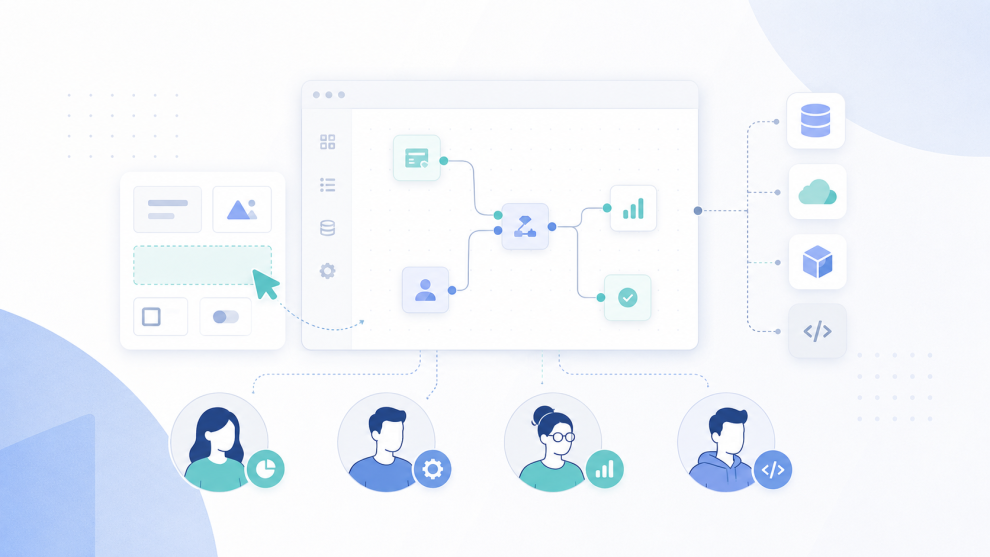
Modern no-code platforms do more than arrange interface components. They can model workflows, store structured data, call APIs, trigger events, apply access rules, integrate with SaaS platforms, and deploy applications into managed runtime environments. AI-assisted builders are also reducing the effort required to create forms, logic, automations, and internal tools.
This changes who benefits from learning no-code. The strongest candidates understand a business domain, own a measurable outcome, and can work within technical guardrails.
That includes employees who know why a claims exception gets delayed, where an onboarding workflow breaks, or why a regional team still depends on spreadsheets. No-code lets them express that process knowledge as an executable workflow or testable prototype.
The value comes from reducing translation cycles, not bypassing technology leadership. A visual workflow can still contain poor logic. A no-code database can expose sensitive information. An automation can fail silently, create duplicate records, or overwhelm an API. Learning no-code should make domain experts better collaborators in software delivery, not unreviewed software owners.
Who Should Learn No-Code Development?
- Business process owners with recurring operational bottlenecks. Operations, finance, procurement, HR, compliance, and customer-service leaders often manage workflows that are too specific for packaged software but too small to win priority in the central engineering backlog. They should learn how to model states, approvals, exceptions, timers, and role-based permissions. A procurement owner should understand how a request moves from draft to approval, what happens when a budget code is invalid, and which event creates an ERP record. The objective is a governed application that engineering can review, integrate, and support.
- Product managers and customer-experience teams that need evidence before committing engineering capacity. These teams should learn no-code when they need to validate workflows, onboarding logic, or service concepts before funding production development. A clickable design tests presentation, while a no-code prototype tests behavior by capturing data, invoking sandbox APIs, simulating permissions, and measuring abandonment. Product teams must still separate prototype architecture from production architecture, especially when performance, accessibility, security, or complex integrations shape the final design.
- Business analysts, data analysts, and automation specialists who connect systems. These roles already work with schemas, rules, reporting, and process dependencies. Their learning path should cover API contracts, authentication, webhooks, rate limits, validation, retry logic, and error handling. Without those concepts, an automation may work in a demonstration and fail under load. With them, analysts can build controlled departmental solutions and identify where custom services are required.
- Professional developers, architects, and platform engineers responsible for governance. Technical teams need enough platform knowledge to assess generated data models, identity integration, deployment controls, observability, testability, and exit options. Developers can also use no-code for internal tooling and straightforward workflows that do not justify a custom stack. Their involvement prevents the final-stage problem where a platform handles common requirements quickly but becomes difficult to extend. Thoughtworks has warned that visual development does not remove the need for source control, testing, architecture, and skilled technical oversight.
What Should No-Code Learners Understand Before Building?
Enterprise no-code training should begin with software concepts, not interface tutorials. A capable learner should know how to define entities and relationships, distinguish workflow state from interface state, validate inputs at the correct layer, and avoid storing the same business fact in several systems.
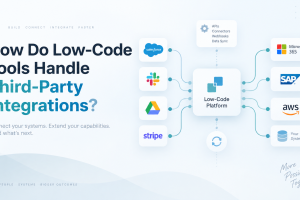
They should also understand integration boundaries. Directly connecting every application to every SaaS platform creates brittle dependencies. Mature teams route sensitive or reusable integrations through managed APIs, integration platforms, or event services. This allows security teams to control credentials, apply throttling, monitor failures, and change downstream systems without rebuilding every departmental application.
Security training is equally important. Learners need to work with least-privilege access, enterprise identity, environment separation, audit logs, data retention rules, and approved connectors. They should recognize when an application contains regulated data and requires architecture, privacy, security, or compliance review.
Research published in MIS Quarterly Executive in 2024 supports this caution. One study based on 30 interviews found that weak governance can produce poor software quality, shadow IT, and technical debt. Another, drawing on 24 organizations, concluded that citizen development requires deliberate choices around security, compliance, organizational design, and governance.
Where No-Code Should Stop and Engineering Should Take Over
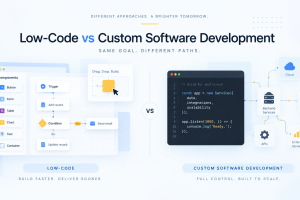
No-code is a poor default when an application depends on differentiated algorithms, complex transaction consistency, strict latency targets, specialized device capabilities, extensive offline operation, or unusual security controls. It also becomes risky when platform pricing scales unpredictably with users, records, automations, or transactions.
The transition point should be defined before a pilot starts. Leaders need explicit thresholds for data sensitivity, business criticality, integration count, transaction volume, recovery objectives, and customization. An employee directory workflow and a revenue-critical payment service should not follow the same approval path.
Teams should also examine portability. Some platforms expose application metadata, APIs, and standard deployment tooling. Others retain logic in proprietary formats that are difficult to test outside the platform or migrate later. The decision also covers support, vendor dependency, and eventual retirement.
A no-code application becomes enterprise software as soon as employees rely on it. It then needs an owner, support process, change history, monitoring, incident response, and a plan for platform updates. The absence of handwritten code does not reduce operational accountability.
How Leaders Can Build Capability Without Expanding Shadow IT
A practical enterprise program starts with a bounded portfolio. Leaders can select low-risk workflows, assign product and technical owners, provide approved components, and require review before release. A platform team can publish reference architectures, reusable authentication patterns, data-classification rules, and escalation criteria.
External consulting and outsourcing firms can help when internal teams need platform selection, governance design, integration architecture, or a path from prototype to custom production software. Providers such as GeekyAnts, Thoughtworks, and Accenture bring different mixes of product engineering, technology strategy, enterprise integration, and low-code experience. The useful evaluation criterion is not which firm promises the fastest build. It is whether the partner can explain where no-code fits, where custom engineering remains necessary, and how applications will be governed over time.
The employees who should learn no-code are those closest to recurring business problems and those accountable for the systems created to solve them. Domain experts need enough technical depth to model reliable workflows. Engineering teams need enough platform depth to govern and extend them. Product leaders need enough architectural judgment to distinguish validation speed from production readiness.
For a VP deciding where to begin, the most productive next step is not a company-wide license purchase. It is a focused working session that maps the application backlog, identifies suitable no-code candidates, defines engineering handoff thresholds, and estimates the governance effort required. That conversation turns no-code from an individual productivity tool into a controlled delivery capability.


Add Comment