





Got a great idea? Building a Minimum Viable Product (MVP) is the single fastest way to find out if it has legs. The modern approach is simple: identify one core problem your customers face, define the absolute smallest feature set that solves it, and then use a rapid development tool—like a low-code platform—to get it built and launched. Fast.
This isn't about building a half-baked product. It’s about turning your concept into something real that users can touch, all in a matter of weeks, not years.
The Modern Shift to Low-Code MVP Development
Forget those long, drawn-out development cycles that burn through cash and end with a product nobody asked for. The entire point of an MVP is to get real-world validation as quickly as humanly possible. This is exactly where low-code platforms have become a game-changer for founders and product teams.
Instead of getting bogged down writing code from the ground up, you’re using visual editors and drag-and-drop interfaces to assemble your app. This isn’t just a shortcut; it's a massive strategic advantage. It lets non-technical founders build their own vision and helps technical teams move at lightning speed. The whole goal is to shrink the distance between your idea and the feedback you need.
Why Low-Code Is the Smart Choice for Your MVP
The most obvious win here is a dramatically shorter time to market. I’ve seen projects that would traditionally take months and a small army of developers get built by one or two people in just a few weeks. That kind of speed lets you test your core assumptions before you bet the farm on them.
But it's not just about speed. Building your MVP with low-code brings a few other critical advantages:
- Drastically Lower Costs: You sidestep the huge expense of developer salaries, which is often the biggest line item for an early-stage venture.
- Effortless Iteration: When user feedback rolls in—and it will—making changes is straightforward. You can add a new data field, adjust a workflow, or tweak the UI in minutes. No more waiting days for a simple update.
- Founder Empowerment: It puts the power back in the hands of the person with the vision. You can directly shape the product yourself, without your ideas getting lost in translation with a dev team.
The real purpose of an MVP isn't to build the minimum product; it's to get the maximum learning from the least amount of work. Low-code is the ultimate tool for this, minimizing the build effort so you can maximize learning.
This entire process boils down to a tight, repeatable loop: figure out the problem, build the core solution, and get it out there to see what happens.

This simple cycle—Define, Build, Launch—is what low-code makes possible. It takes what used to be a daunting process and turns it into a clear, manageable workflow.
To give you a clearer picture, here’s a quick breakdown of how these phases come together in a modern MVP project.
The Modern MVP Lifecycle at a Glance
| Phase | Objective | Key Action |
|---|---|---|
| 1. Define & Scope | Nail down the core problem and the absolute minimum features to solve it. | Create a "Pain & Gain" map for your target user; list out "must-have" vs. "nice-to-have" features. |
| 2. Design & Prototype | Create a simple, functional user flow and interface. | Use wireframing tools or even the low-code platform itself to map out screens and user journeys. |
| 3. Build & Implement | Use a low-code platform to build the core application. | Configure the database, build the user interface with drag-and-drop elements, and set up key workflows. |
| 4. Test & Refine | Ensure the application works as intended and is bug-free. | Conduct internal user testing with a small group to catch obvious issues before a public launch. |
| 5. Launch & Learn | Deploy the MVP to your first set of real users and start collecting feedback. | Monitor user behavior, collect feedback through surveys or interviews, and plan your next iteration. |
Each phase is designed to be quick and iterative, allowing you to move through the entire lifecycle rapidly and start learning from the market.
The Market Is Voting with Its Wallet
This isn't just a niche trend; it's a fundamental shift in how products get built. The global market for MVP development tools was valued at around $1.2 billion in 2023 and is on track to hit $3.8 billion by 2032, according to reports from firms like Intellect Market Research. This explosive growth shows just how much demand there is for tools that deliver speed and efficiency.
Ultimately, building your MVP with a low-code platform is a strategic decision. It's about focusing your most precious resources—time and money—on the one thing that truly matters: finding out if you have a business worth building. You can explore the specific benefits of low-code platforms in our more detailed guide.
Define Your Problem and Scope Your Core Features
Before you write a single line of code or even open a no-code builder, stop. The most critical step is getting crystal clear on the one, single problem you’re solving. So many founders get this wrong.
An MVP isn't a smaller, cheaper version of your final product. Think of it as a laser-focused tool that does one thing exceptionally well. Your initial success depends entirely on solving a real, painful problem for a specific group of people—not on how many features you can cram into version one.
I see it all the time: founders fall in love with their solution and completely lose sight of the customer's actual pain point. To sidestep this common trap, you have to get out of your own head. The goal is to go from a vague idea like "a better way to manage tasks" to a sharp problem statement, something like: "freelancers are losing money because they can't easily track time across multiple projects without buying expensive, bloated software."

Understand Who You Are Building For
Your first move is to sketch out a simple user persona. This isn't a deep, complex marketing profile. It’s a quick snapshot of your ideal first customer. Give them a name, a role, and—most importantly—a core frustration your product will eliminate.
Let's say you're building a meal-planning app. Your persona might be "Busy Brian," a working parent who wants to cook healthy dinners but is just exhausted by the process of finding recipes and building a grocery list. His real problem isn't the lack of recipes online; it's the mental energy it takes to connect those recipes to an organized shopping trip.
With Brian in mind, you can use a powerful framework called Jobs to Be Done (JTBD). This approach changes the question from "What features do users want?" to "What 'job' are they 'hiring' my product to do?"
A classic mistake is building features for a hypothetical user. Instead, define a real "job" for your product. People don't buy a drill because they want a drill; they buy it because they want a quarter-inch hole. What is your user's "quarter-inch hole"?
This simple mental shift is a game-changer. For Busy Brian, the job isn't "browsing recipes." He's hiring your app to "make weeknight dinners fast and stress-free." That insight instantly clarifies which features are mission-critical and which are just noise.
Ruthlessly Prioritize Your Features
Once you know the job, you can brainstorm all the features you can think of. Then comes the hard part: you have to start cutting. Feature creep is the silent killer of MVPs, and your only defense is ruthless prioritization.
The goal here is to find the one or two core features that directly get the job done for your user. Everything else is a distraction for later.
A simple prioritization matrix is perfect for this. Just create four quadrants:
- Must-Have: The product is fundamentally broken without these. They are essential for solving the core problem.
- Should-Have: Important for a good experience, but not critical for the first launch.
- Could-Have: These are classic "nice-to-haves" that are definitely not a priority.
- Won't-Have (For Now): Features that are completely out of scope for the MVP. Park them here so you don't forget them, but be firm.
Applying this to Busy Brian’s meal-planning app, the list might look like this:
- Must-Have: Generate a weekly meal plan and an associated grocery list.
- Should-Have: Ability to swap meals within the generated plan.
- Could-Have: Nutritional information for each recipe.
- Won't-Have: A social feature for sharing meal plans with friends.
This exercise forces you to be brutally honest about what "minimum" and "viable" actually mean. Your must-have list should be painfully short. If you have more than three items on it, you’re probably still thinking too big.
Look at the giants. Dropbox didn't launch with sophisticated team folders and collaboration tools. They launched with a simple video demonstrating one thing: seamless, reliable file syncing. That’s it. They did one job perfectly, and that’s exactly what your MVP needs to do, too.
Choose the Right Low-Code Platform for Your MVP
You’ve defined the problem and you know which core features you need. Now for the most important technical decision you'll make. Picking the right low-code or no-code platform can feel like a superpower, turning your idea into a real, working product in just a few weeks.
But I’ve seen the other side, too. The wrong choice can lead to frustrating dead ends, complete rebuilds, and months of wasted time and money. The market is packed with options, so let's cut through the noise.
This isn't about finding the tool with the longest feature list. It's about finding the one that perfectly matches your project, your team's comfort level with tech, and where you want to go next. A platform that's brilliant for building an internal dashboard could be a disastrous choice for a mobile app you want to get into the App Store.
Matching the Platform to Your Project Type
First, let's get specific. What are you actually trying to build? Different platforms are masters of different domains.
Complex Web Applications: If your MVP involves tricky logic, custom workflows, or a heavy-duty database, you should be looking at something like Bubble. It offers incredible flexibility, letting you build almost any web app you can imagine without code. Its visual workflow editor is a beast, but be prepared—it comes with a steeper learning curve.
Simple Mobile Apps: Need a native mobile app for iOS and Android? Platforms like Adalo were built from the ground up for this. You can drag and drop screens, connect components from its marketplace, and get a mobile-first product into your users' hands relatively quickly.
Data-Driven Internal Tools or Simple Web Apps: For things like internal dashboards, simple customer portals, or directories, you can’t beat the speed of Glide. It can spin up a functional app from a Google Sheet or an Airtable base in minutes. It's not as flexible as Bubble, but for data-centric projects, it's lightning fast.
The one question I always tell founders to ask is this: "Does this platform's main strength match my MVP's single most important function?" Don't get sidetracked by shiny secondary features. Focus on how well it handles your core mission.
Nailing this alignment from the start helps you avoid the classic mistake: picking a powerful, complicated tool for a simple job, or worse, a simple tool that can't handle the complexity you actually need.
The No-Code vs. Low-Code Decision
People often throw around "no-code" and "low-code" as if they mean the same thing, but the difference really matters for your MVP.
No-code platforms are all about speed and simplicity. Think of Glide or Softr. They are completely visual, with drag-and-drop interfaces that anyone can use. They’re perfect for testing an idea at maximum velocity, but you might hit a wall if you need highly custom functionality down the road.
Low-code platforms, like Bubble, trade some of that instant simplicity for power and flexibility. They are still highly visual, but they open the door to more complex logic and often let you inject custom code for specific features. This gives you a much longer runway for growth but means you'll need to invest more time in learning the tool. If you want to dig deeper into the options, our guide on the best low-code platforms is a great resource.
To make this choice more concrete, here's a quick breakdown of the major players and where they shine.
Low-Code Platform Comparison for MVP Development
This table gives a high-level view of which platform might be the right starting point for your project.
| Platform | Best For | Learning Curve | Key Advantage |
|---|---|---|---|
| Bubble | Complex Web Apps, Marketplaces, Social Networks | High | Unmatched flexibility and backend workflow control. |
| Adalo | Native Mobile Apps (iOS & Android) | Medium | Quickly builds and publishes to app stores. |
| Glide | Data-driven Apps, Internal Tools, Simple Portals | Low | Extreme speed from spreadsheet to app. |
| Softr | Client Portals, Internal Tools from Airtable/Google Sheets | Low | Beautiful UI templates and easy setup. |
Ultimately, it all comes down to your immediate priorities. If you need to test a hypothesis as fast as humanly possible, a pure no-code tool like Glide or Softr is your best friend. But if you're pretty sure you'll need more complex logic and are willing to put in the upfront effort, a low-code platform like Bubble will give you much more room to scale.
Alright, let's roll up our sleeves. All the planning and scoping are done—now it's time to actually build this thing. This is where your MVP stops being a collection of ideas and starts becoming a real, usable product. It can feel like the most daunting part of the journey, but with today's low-code platforms, it’s more of a creative sprint than a technical marathon.
We're going to focus on the practical, hands-on patterns that work. This isn't just about dragging some elements onto a canvas; it's about building a solid foundation that you can confidently build upon for months and years to come.

Start with Your Data, Not Your Design
I can't stress this enough: before you touch a single pixel of the user interface, get your database structure right. A messy database is the single biggest source of technical debt I see in early-stage projects. It leads to slow performance, painful updates, and a whole lot of headaches down the line.
Think about the core "nouns" of your app. For a simple dog-walking service app, what are they? You've got "Clients," their "Dogs," and the "Appointments." Each of these becomes a table in your database. From there, you map out the fields and how they connect. A "Dog" belongs to a "Client," and an "Appointment" is linked to both.
This is where AI assistants in modern low-code tools are a game-changer. You can describe what you're building in plain English, and the AI will propose a logical schema.
- Example Prompt: "I'm building a simple app for a dog walking service. I need to track clients, their dogs, and individual appointments."
- AI-Generated Output: The platform might instantly suggest tables for
Clients(with fields for name, email),Dogs(name, breed, and a link to theClient), andAppointments(date, time, and links to theClientandDog).
Using AI for this initial setup is a huge shortcut that helps you follow best practices from day one. If you're tackling something more complex on the backend, our guide on building a no-code backend dives much deeper into structuring your data for scale.
Craft a Focused User Interface
Once your data foundation is solid, you can turn your attention to the front-end. The goal here is relentless focus. Your MVP's interface must guide the user straight to that one core action you defined in the planning phase. Resist the temptation to add clutter.
Most platforms have a visual, drag-and-drop editor. Don't go crazy. Just create the absolute essentials:
- A Sign-Up / Login Page: The front door to your app.
- A Main Dashboard: The first thing a user sees. It should deliver on your core promise immediately.
- A Core Action Page: The screen where the user does the main thing—like booking a walk or adding a new task.
Keep your initial UI brutally simple. Every single element on the screen needs a job. If it doesn't directly help the user achieve their primary goal, get rid of it. You can always add more later based on actual user feedback.
Wire Up Your Core Workflows
Workflows are the logic that makes everything tick. They are the "verbs" that connect your interface (the nouns) to your database. The most basic workflow is user authentication—signing up, logging in, and logging out. Thankfully, this is a pre-built feature in nearly every low-code tool.
After that, just build the single most important workflow. For our dog-walking app, it’s this: "User clicks 'Book a Walk' -> A form appears -> User fills it out and clicks 'Confirm' -> A new record is created in the 'Appointments' table and shows up on their dashboard."
This is another area where AI is dramatically changing the game. The speed boost is real; research shows the median MVP development time has dropped by 25% over the last decade, largely thanks to tools like these. You can see more on this accelerated MVP timeline and its impact. When you use AI to generate application logic or suggest user flows, you're not just moving faster—you're getting a smarter starting point.
Launch Your MVP and Gather Actionable Feedback
So, you've built it. Your Minimum Viable Product is finally a real thing. The temptation is to plan a big launch party and blast it all over social media, but that’s one of the biggest mistakes you can make at this stage.
A splashy launch is a victory lap. Your MVP launch is something different entirely—it's the start of a quiet, critical conversation with your first users. The goal here is a soft launch to a small, hand-picked audience. These aren't just random people; they're the ones who feel the problem you're solving most intensely. Your job is to find them where they already hang out and, most importantly, start listening.

Find Your First Users
Forget about running expensive ad campaigns. Your first ten users will almost always come from manual, strategic outreach in the niche communities where they live online. The trick is to be a contributing member of these communities, not a spammer who drops a link and runs.
Here’s where I've had the most success finding those crucial first users:
- Niche Subreddits: Dive into the Reddit communities where your audience is already talking about their pain points. If you've built a B2B SaaS tool, this might be r/sales. For a new fitness app, try r/bodyweightfitness. Get involved in conversations first, then share what you've built when it feels natural.
- LinkedIn Groups: Search for professional groups in your industry. A carefully written, non-salesy post asking for genuine feedback can work wonders. Frame it as seeking expert opinions.
- Product Hunt: While it can feel like a big deal, you can position your MVP as an "early look" for the Product Hunt community. You'll attract savvy users who genuinely love testing new things and giving detailed feedback.
- BetaList: This platform is built for exactly this moment. It connects founders with users who specifically want to try new products before they hit the mainstream.
Remember, the goal isn't mass adoption yet. You're searching for a handful of people who will give you brutally honest, detailed feedback because they are desperate for a solution.
Set Up Your Feedback Channels
Once you have a few users, you need a way to hear what they have to say—and, just as importantly, see what they actually do. Just waiting for emails to roll in is a recipe for failure. Low-code platforms make it incredibly easy to wire up powerful feedback tools right inside your app.
Here are the absolute essentials you should have in place before a single user logs in:
- Behavioral Analytics: Tools like Google Analytics or Mixpanel are non-negotiable. You have to know which features people use, where they get stuck, and why they leave. This quantitative data tells you the real story.
- Visual Feedback and Heatmaps: I always recommend installing Hotjar or a similar tool from day one. Seeing heatmaps of where users click and watching session recordings of their journeys is like looking over their shoulder. It reveals usability problems you would never guess on your own.
- In-App Surveys and Forms: Use a simple tool like Tally or Typeform to embed a feedback form directly into your product. A simple "Got Feedback?" button is perfect—easy to find but not annoying.
An MVP without a feedback loop is just a shot in the dark. Your first launch isn't about getting sales; it's about getting data. The faster you can collect and analyze that data, the faster you'll find product-market fit.
Getting this infrastructure set up before you invite your first user transforms user opinions from random noise into a clear, prioritized backlog for your next development sprint.
Ask Questions That Elicit Real Insights
The quality of feedback you receive is a direct result of the questions you ask. "Do you like it?" is a worthless question. It encourages a simple "yes" or "no" and tells you nothing about their experience or what they truly need.
You have to ask open-ended questions that force a real story. Over the years, I've found that a small set of specific questions consistently delivers the most actionable insights.
A Template for Better Feedback Questions
| Question | What It Uncovers |
|---|---|
| "What did you hope this app would do that it didn't?" | This is gold. It reveals missing features and unmet expectations, feeding your product roadmap directly. |
| "Walk me through what you did when you first signed in." | Exposes all the confusing parts of your onboarding flow and first-time user experience. |
| "Was there anything that surprised or confused you?" | Helps you pinpoint specific UI/UX issues and internal jargon that doesn't make sense to an outsider. |
| "If you had a magic wand, what one thing would you change?" | This forces prioritization and tells you the single most impactful improvement from the user's perspective. |
These kinds of questions shift the conversation from vague opinions to concrete experiences. When you combine these qualitative answers with the hard data from your analytics tools, you get a 360-degree view of what's working, what's not, and exactly what to build next.
Alright, your MVP is live. The first bits of feedback are trickling in, and the launch-day excitement is giving way to a simple question: "Now what?"
This is where the real work of product building starts. It’s not just about patching bugs. It's about turning that initial user feedback into a smart, sustainable plan that evolves your MVP into a mature, valuable product.
You'll be looking at two kinds of information. First, there's the quantitative data from your analytics—what people are clicking on, where they're dropping off. This tells you what is happening. Then there’s the qualitative feedback from user interviews, surveys, and support chats—their frustrations, their "aha!" moments. This tells you why.
Putting the two together is where the magic happens. For example, your analytics might show that 73% of users never touch a certain feature. It's easy to assume the feature is a flop. But then you talk to a few users and discover they can't find the button for it, or don't understand what it does. One piece of data is a symptom; both together give you a diagnosis.
From Data to Decisions
Once you have a handle on what your users are actually doing and thinking, you can start mapping out the future. Forget about complicated Gantt charts or rigid, long-term plans. At this stage, you need something flexible.
I’ve always found a simple “Now, Next, Later” framework works wonders here. It’s easy for everyone on the team to grasp and forces you to make tough priority calls.
- Now: These are the absolute must-haves for your current work cycle. Think critical bug fixes and the highest-impact features you can build quickly.
- Next: This is your on-deck circle. It includes validated ideas you're planning to tackle in the next one or two sprints.
- Later: This is your idea parking lot. It’s for all the great suggestions and bigger-picture features that aren't a priority right now but are too good to forget.
This approach keeps the team focused on what’s immediately important while still maintaining a clear vision for what's on the horizon.
Your MVP roadmap isn't a contract set in stone; it's a living document. Its job is to reflect what you're learning from your users. If your roadmap looks exactly the same three months after launch, you're not listening.
Prioritizing What Matters Most
Your "Later" column will fill up fast. So how do you decide what gets promoted to "Next" and "Now"? You need a simple way to bring some objectivity to the process. My go-to tool for this is the Impact/Effort Matrix.
It’s a straightforward way to plot every potential feature or fix on a four-quadrant chart.
| Low Effort | High Effort | |
|---|---|---|
| High Impact | Quick Wins: Do these now. | Major Projects: Plan these carefully. |
| Low Impact | Fill-ins: Tackle if you have time. | Time Sinks: Avoid these. |
This visual method makes your priorities crystal clear. Those high-impact, low-effort tasks are your Quick Wins. Knocking these out delivers immediate value to users and keeps your momentum strong.
When to Evolve Beyond Low-Code
As your product grows and your user base expands, you'll eventually hit a fork in the road. When is it time to graduate from your no-code platform to a custom-coded solution?
There isn't a single magic number, but here are the signals I tell founders to watch for:
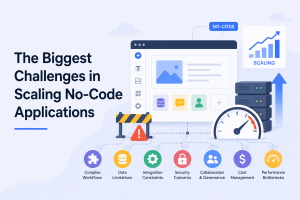
- You're constantly hitting performance and scalability limits. The app feels slow, or you're worried about what will happen if you get a big spike in traffic.
- You need a very specific piece of functionality or a unique integration that your platform just doesn't support, and there are no workarounds.
- The monthly costs for your no-code platform, plus all its plugins and add-ons, are starting to look like the salary for a junior developer.
Making the leap to a full-code stack is a huge decision, but it's a fantastic problem to have. It means your MVP did exactly what it was supposed to do: it proved you have a business worth building.
Frequently Asked Questions About Building an MVP
When I talk to founders about building their first MVP, the same handful of questions always come up. It's totally normal to wonder about the 'M' in MVP and, of course, the cost.
Let's get right into the answers I usually give, especially for those of you taking the smarter, faster low-code route.
How Minimal Should My MVP Be?
I always tell founders to aim for this simple rule: solve one core problem for one target user exceptionally well. That's it.
The moment you find yourself saying "and it will also do this for this other group of people," you've strayed from the path. Your MVP isn't a Swiss Army knife; it's a scalpel, designed for one precise, critical job. Get that one thing right, and you’ve won the first, most important battle.
What Does It Cost to Build a Low-Code MVP?
This is where the low-code approach really shines. You can get the tools you need for as little as under $100 per month. Seriously.
Even if you decide to bring in a freelance low-code developer to help you build faster, you’re likely looking at a few thousand dollars. That's a tiny fraction of what it would cost to hire a traditional engineering team, which can easily run into the tens of thousands before you even have a working prototype.
The most successful businesses prove their core idea can generate revenue before investing heavily in tech. Many now run entirely on low-code platforms, proving you can scale significantly before needing to re-evaluate your tech stack. It's about growing into complexity, not starting with it.


Add Comment