





Citizen development creates an uncomfortable problem for enterprise technology leaders.
The business wants faster automation. Engineering teams already have full roadmaps. Low-code platforms, workflow tools, AI assistants, and application builders now allow employees outside software engineering to create working solutions in days.
The opportunity is real. So is the risk.
A finance analyst can replace a spreadsheet-based approval process without waiting three months for an engineering sprint. A service operations manager can build an internal intake workflow. A sales operations team can automate repetitive data movement between approved systems.
But the same tools can also create applications that expose regulated data, bypass architecture controls, make automated decisions, or become operationally critical without anyone knowing who owns them.
The question for technology leaders is therefore not whether citizen development should exist. It already does.
The important question is: what should citizen developers be allowed to build, and where should professional engineering take over?
Recent Gartner research makes the governance challenge explicit. Its 2026 guidance says low-code development can accelerate delivery, but few citizen developers can build applications safely at scale without structured support, decision rights, and risk-based guardrails.
What Should a Citizen Developer Actually Be Responsible For?
A citizen developer should solve bounded business problems, not recreate the responsibilities of a software engineering organization.
The strongest candidates are workflows where the creator understands the business process deeply, the technical blast radius remains limited, and failure does not interrupt a critical customer or regulatory process.
A useful enterprise boundary looks like this:
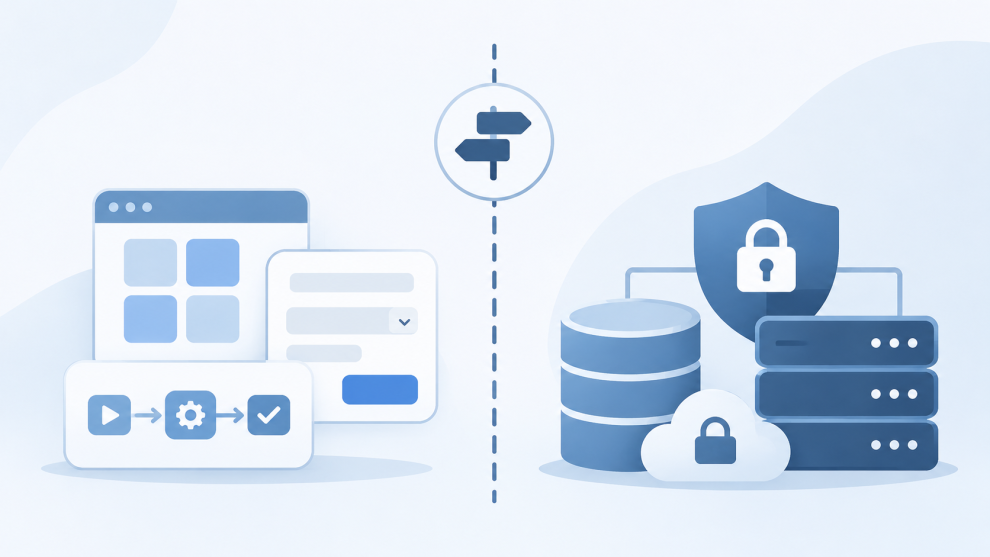
- Personal productivity and small team workflows: Citizen developers can build approval flows, notifications, internal forms, dashboards, document routing, task automation, and lightweight operational tools when they use approved platforms and data sources. These solutions should have limited audiences, reversible actions, clear ownership, and no dependency on custom infrastructure.
- Departmental applications with controlled data access: Business teams can build applications for areas such as employee requests, field inspections, supplier onboarding, policy acknowledgements, inventory tracking, or operational reporting when platform teams provide standardized identity, permissions, connectors, environments, and deployment controls. The citizen developer owns process logic, while IT owns the platform boundaries.
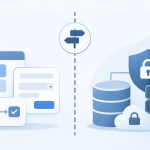
- Enterprise or customer-facing systems: Professional engineering should take ownership when an application crosses business units, processes sensitive information, becomes financially material, serves external customers, integrates with core systems, or requires high availability. At this point, architecture, security engineering, testing, observability, deployment, recovery, and lifecycle management become more important than development speed.
The distinction is important because citizen development should reduce the application backlog, not create a second unmanaged technology estate.
Microsoft’s own internal Power Platform implementation illustrates the scale problem. Microsoft reports 50,000 to 60,000 active makers each month, more than 250,000 applications, more than 300,000 flows, and over 20,000 environments. Its current governance strategy groups development according to ownership and risk instead of attempting to govern every application identically.
That is the model large enterprises should examine.
Which Applications Should Citizen Developers Never Own Alone?
Risk should determine ownership.
A workflow that emails a manager when a purchase request arrives does not need the same controls as an application approving a $5 million supplier contract. Yet many citizen-development programs focus on platform access instead of business impact.
Technology leaders should intervene when applications involve sensitive customer information, financial calculations, payment processing, regulated records, production infrastructure, identity provisioning, privileged access, external APIs, automated customer decisions, or irreversible business actions.
AI makes this boundary even more important.
AI-assisted application builders can now generate workflows, data models, formulas, connectors, and application logic from natural-language instructions. This dramatically lowers the technical barrier to creation, but it does not remove architecture risk.
A business user may successfully build an AI agent that reads customer records and recommends an action. The problem appears later when engineering asks where prompts are stored, which data sources the agent can query, how outputs are audited, whether confidential information reaches an external model provider, or what happens when the model changes.
Gartner’s 2026 research on AI citizen development specifically argues for shared, governed platform foundations because allowing individual business developers to independently select platforms and dependencies creates additional enterprise risk.
The rule should therefore remain simple: the closer an application gets to money, customers, regulated data, identity, or production infrastructure, the stronger professional engineering ownership should become.
How Can Engineering Govern Citizen Developers Without Becoming the Bottleneck Again?
The wrong response is to require architecture review for every workflow.
That simply recreates the queue citizen development was supposed to remove.
A better approach uses risk tiers.
Low-risk applications should move through predefined environments using approved components, connectors, permissions, and templates. Medium-risk applications should trigger targeted reviews for data access, integrations, business continuity, and ownership. High-risk applications should enter the normal engineering lifecycle.
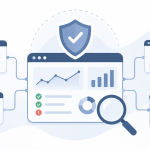
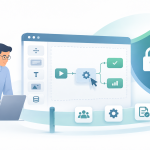
Platform engineering can make this practical by providing controlled development environments, reusable identity services, approved API connectors, centralized logging, policy enforcement, automated scans, deployment pipelines, and lifecycle monitoring.
Microsoft has increasingly moved in this direction with managed environments, environment routing, data policies, conditional access, sharing controls, and other administrative capabilities designed to govern low-code estates at scale.
The governance model should also answer an often neglected question: who owns the application two years later?
Employees change roles. Departments reorganize. Platforms change licensing. APIs get replaced.
A production workflow with no active owner eventually becomes operational debt.
Gartner highlighted this problem in September 2026, noting that AI-assisted development makes applications easier to create while increasing the need for lifecycle ownership so deployed solutions do not become orphaned.
Every deployed application therefore needs an owner, technical classification, data classification, support expectation, dependency inventory, review date, and retirement path.
When Should a Citizen-Built Solution Be Handed to Professional Engineers?
The handoff point should be defined before development starts.
A workflow should move into professional engineering when its usage expands materially, its failure begins affecting revenue or customer experience, it requires custom integrations, its data classification increases, or business continuity expectations exceed what the original low-code implementation can support.
This does not mean rebuilding everything.
Engineering teams can often preserve the citizen developer’s validated workflow while replacing fragile components with production-grade services. Business teams keep their process knowledge. Professional developers add architecture, testing, observability, security, resilience, and deployment discipline.
This model also creates a productive relationship between business and engineering. Citizen developers become discovery partners who validate requirements quickly instead of informal competitors to software teams.
The result is often a better development pipeline: business teams prove the workflow first, while engineering invests deeply only when the problem demonstrates sufficient value or risk.
Which Consulting Partners Can Help Enterprises Establish the Right Model?
Large organizations sometimes need outside support because citizen development sits across platform engineering, application modernization, security, governance, operating models, and organizational change.
Accenture brings significant experience with enterprise platform transformation and large-scale operating models. Deloitte often approaches the problem through technology governance, controls, risk, and broader transformation programs. GeekyAnts can be relevant where organizations need a more engineering-led approach connecting low-code experimentation with production application architecture, AI-powered product engineering, integrations, and modernization.
The appropriate partner depends less on platform familiarity and more on the problem being solved. An organization designing a global governance program has different requirements from one trying to productionize several successful citizen-built applications.
The consulting conversation should therefore begin with the existing application estate, risk categories, platform architecture, ownership gaps, and escalation rules rather than with a specific low-code product.
What Should Technology Leaders Define Before Expanding Citizen Development?
Successful citizen development requires clear boundaries more than unlimited access.
Engineering leaders should be able to tell employees which applications they can create independently, which require review, and which must remain under professional engineering ownership.
That definition should exist before thousands of workflows appear across the organization.
For enterprises already seeing rapid low-code or AI-assisted application growth, the most useful next step is often a working session across platform engineering, security, architecture, and business operations. The objective is not to stop citizen development. It is to map the existing estate, define risk tiers, identify applications that need engineering ownership, and design an operating model that lets simple workflows move quickly without allowing critical systems to grow outside normal controls.
That is ultimately the role definition that matters.
Citizen developers should own business problems they understand well.
Professional engineers should own the technology risks the enterprise cannot afford to misunderstand.


Add Comment